Dressing for −20 °C at an Alta aurora stop
The clear nights that bring the aurora over Alta are also the coldest ones, and most of a tour is spent standing still. Good layers make the difference between watching the sky and watching the clock. This guide covers what to pack, what each tour lends you, and the small things that keep fingers and phones working.
Why clear nights in Alta are the cold ones
The nights you hope for are the nights that bite. Without a blanket of cloud, the little warmth of the day escapes straight upward, and inland Finnmark can drop to around −20 °C (−4 °F) or lower.
The shore of the fjord tends to be milder than the valleys and the plateau where many tours stop. A guide may drive you inland because the sky is clearer there, which usually means colder air as well.
Standing still is the hard part
An aurora tour is mostly waiting. You stand facing north at a dark stop for half an hour or more, and your body makes far less heat than it would on a brisk walk through town.
Feet and fingers suffer first. Snow underfoot draws heat through thin soles, while every photo means bare hands in the wind. Plan for those two before you worry about anything else.
Five layers that work
Think in layers you can open or close, rather than one heavy coat. Air trapped between them does most of the work, and you can shed one in a warm bus without freezing once you step outside.
- A merino wool base layer for top and bottom, never cotton
- A fleece or thin wool sweater over it
- A down or synthetic insulated jacket with a hood
- A windproof shell or ski trousers on top, for open ground
- Thick wool socks inside winter boots with grip on ice
Cotton holds sweat and then chills you. A cotton shirt is fine for dinner in town, but at a stop at −15 °C (5 °F) it turns damp and cold within minutes.
From hat to boots
A hat that covers your ears matters more than a stylish one. Add a neck gaiter or scarf you can pull over your nose when the wind picks up on open ground.
For hands, wear thin liner gloves under warm mittens. Mittens keep the fingers together and warmer, and the liners let you work a phone screen for a minute before the hand goes back inside.
Roomy boots keep feet warmer than tight ones, which squeeze out the insulating air. Try your boots with your thickest socks before you pack, and slip chemical warmers into them on the coldest nights.
What each tour lends you
Several operators hand out warm gear, which changes what you need to bring. The lists differ a lot from one tour to the next, so check the listing before you leave home.
| Tour | What you can borrow |
|---|---|
| Alta Adventure small-group hunt | Warm suits and boots |
| Æventyr snowmobile night | Thermal suits and shoes plus gloves and a helmet |
| Finnmark Adventure quad hunt | Warm overalls with a helmet and gloves |
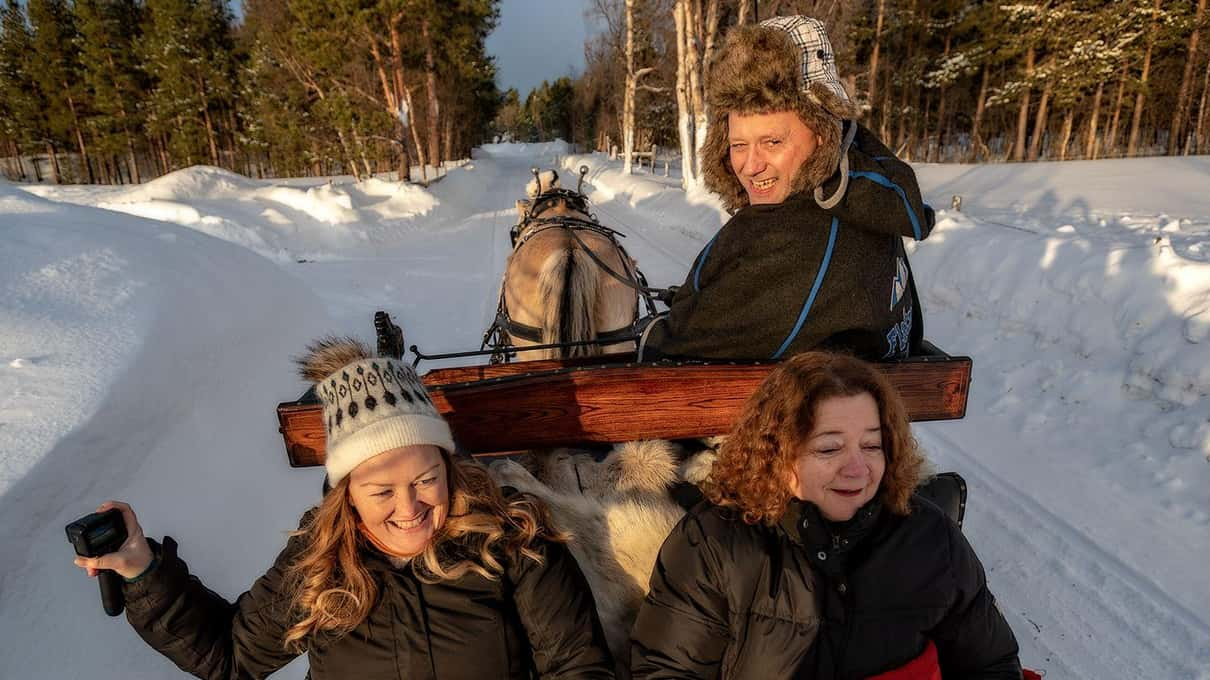
| Flatmoen Natur sleigh ride | Winter clothes (on Viator's listing) and blankets on the sleigh |
| Karlsøy aurora bus | Nothing listed |
| Finnmark Adventure Northern Lights Bus | Nothing listed |
A borrowed suit goes over your own layers, not instead of them. Keep the wool base and the fleece on, and let the suit block the wind.
On the snowmobile and the quad, the wind of the ride adds to the cold. Our comparison of the five ways out sets out how each ride feels and how long you spend on it.
Blankets by a fire, then a hot dinner
Flatmoen Natur's sleigh ride puts you under blankets behind a Norwegian Fjord horse, then sits you by the fire for a 3-course meal. It lasts 3.5 hours from 8 pm, with transport from Alta, from ~$332. The lights are a bonus here, since the sleigh stays in one area.
From campfire smoke to wet gloves
Most tours light a fire or stop somewhere warm. One sleigh-ride reviewer warns that the smoke gets into your clothes, so leave your best coat at the hotel and wear a shell you do not mind airing out.
Moving from a heated bus into the cold and back makes you sweat if you stay zipped up. Open your jacket on board and close it again before you step out.
Snow on gloves melts in a warm vehicle and freezes at the next stop. A spare pair of liners in an inside pocket solves it.
Phones and batteries in the cold
Cold drains batteries fast, and a phone can switch itself off at a stop with half its charge still showing. Keep it in an inside pocket close to your body and take it out only to shoot.
A small power bank in the same pocket is a cheap safeguard. Spare camera batteries belong there too, as our aurora photography guide explains in more detail.
Packing for the bus tours
The two bus tours lend nothing, so you dress for every stop yourself. Karlsøy's night from ~$129 can run up to 6 hours, with a campfire to warm up by but long stretches outdoors.
Finnmark Adventure's Northern Lights Bus from ~$149 is shorter at 3.5 hours, and the bus is heated. It shares the same catch, since there is no suit or pair of boots to borrow, so a thin jacket means a cold night.
If you would rather not pack for deep frost, Alta Adventure's hunt at ~$257 lends warm suits and boots. The price guide compares what each fare covers, and the forecast guide helps you judge the night ahead.